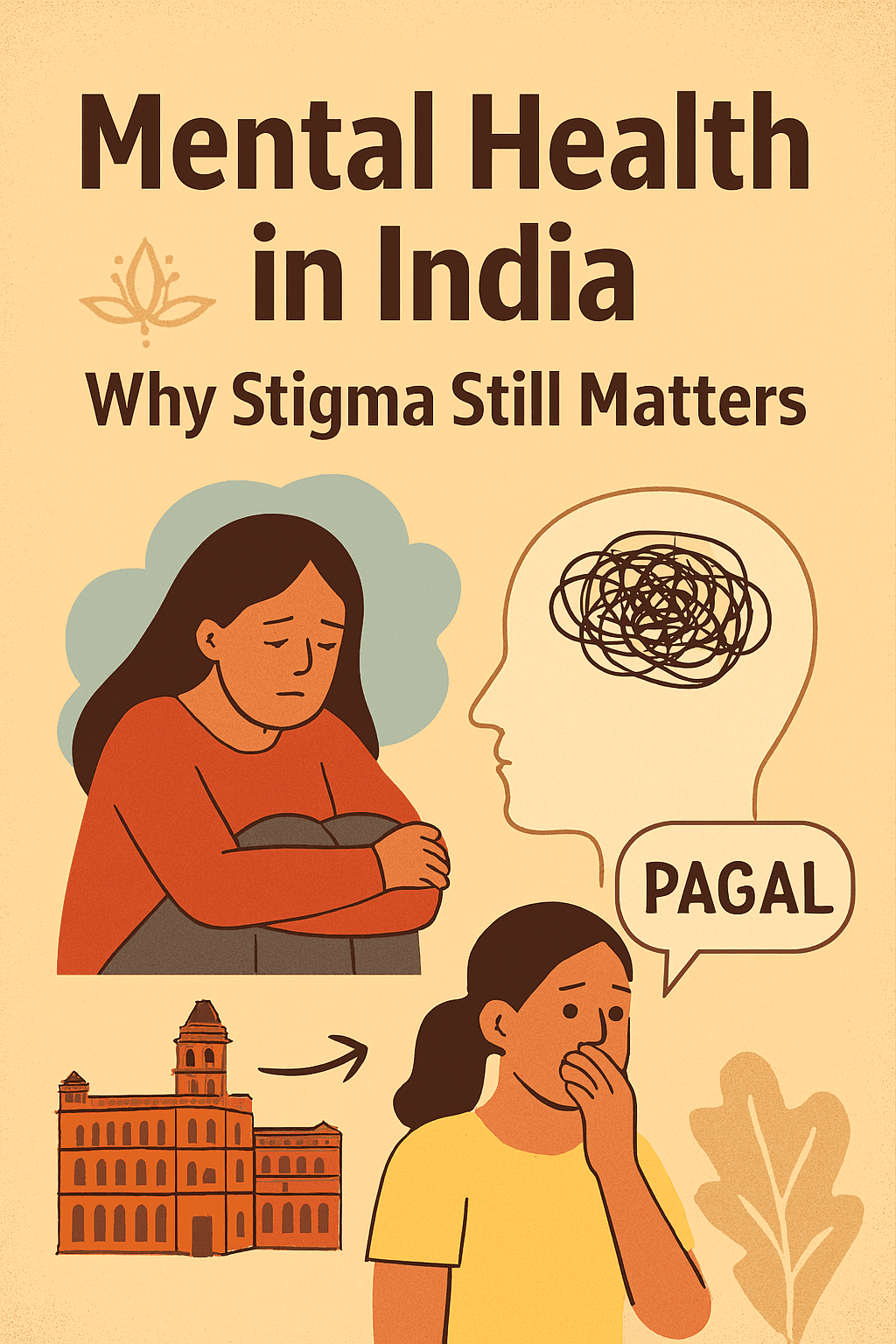
🧠 Breaking the Silence: A History of Stigma and Mental Health in India
The history of stigma around mental health in India is a story of silence, exclusion, and gradual awakening. From ancient spiritual traditions to colonial asylums and modern awareness campaigns, attitudes have shifted—but stigma remains a formidable barrier. Breaking this silence requires collective effort: families, communities, policymakers, and individuals must come together to create a society where mental health is treated with dignity and compassion.
Mental health isn’t just about therapy sessions or hospital wards—it’s about how society sees you when you say, “I’m struggling.” In India, that’s often met with silence, awkwardness, or even judgment. But this stigma didn’t appear overnight—it has a history.
🕉 Ancient Times: Balance & Belief
Ayurveda and yoga have always recognised the mind–body connection. Meditation, breathing, and herbal remedies were part of healing.
But sometimes, mental illness was seen as a curse or karmic punishment, which led to exclusion.
🏛 Colonial India: Asylums & Labels
The British built asylums in the 18th–19th centuries. Instead of care, they focused on confinement.
This created the idea that people with mental illness were “dangerous” or needed to be hidden.
Traditional healing got sidelined, and stigma deepened.
🇮🇳 Post-Independence: Silence at Home
Families often hid mental illness to protect marriage prospects or social reputation.
Services were limited, mostly in big cities. Rural India was left behind.
The National Mental Health Programme (1982) was a step forward, but stigma kept people from seeking help.
📱 Today: Progress & Problems
Words like “pagal” or “mad” are still thrown around casually.
Many people avoid therapy because they fear being judged.
India spends less than 1% of its health budget on mental health, so services remain scarce.
Women, rural communities, and young people often face double stigma.
🌱 The Change We Need
Normalize conversations: Talk about therapy like you talk about fitness.
Integrate care: Mental health should be part of everyday healthcare, not a separate “taboo” service.
Blend tradition & modernity: Yoga, meditation, and psychiatry can work together.
✨ Final Thought
Stigma around mental health in India is centuries old, but every conversation chips away at it. The more we talk, the more we heal—not just individually, but as a society.