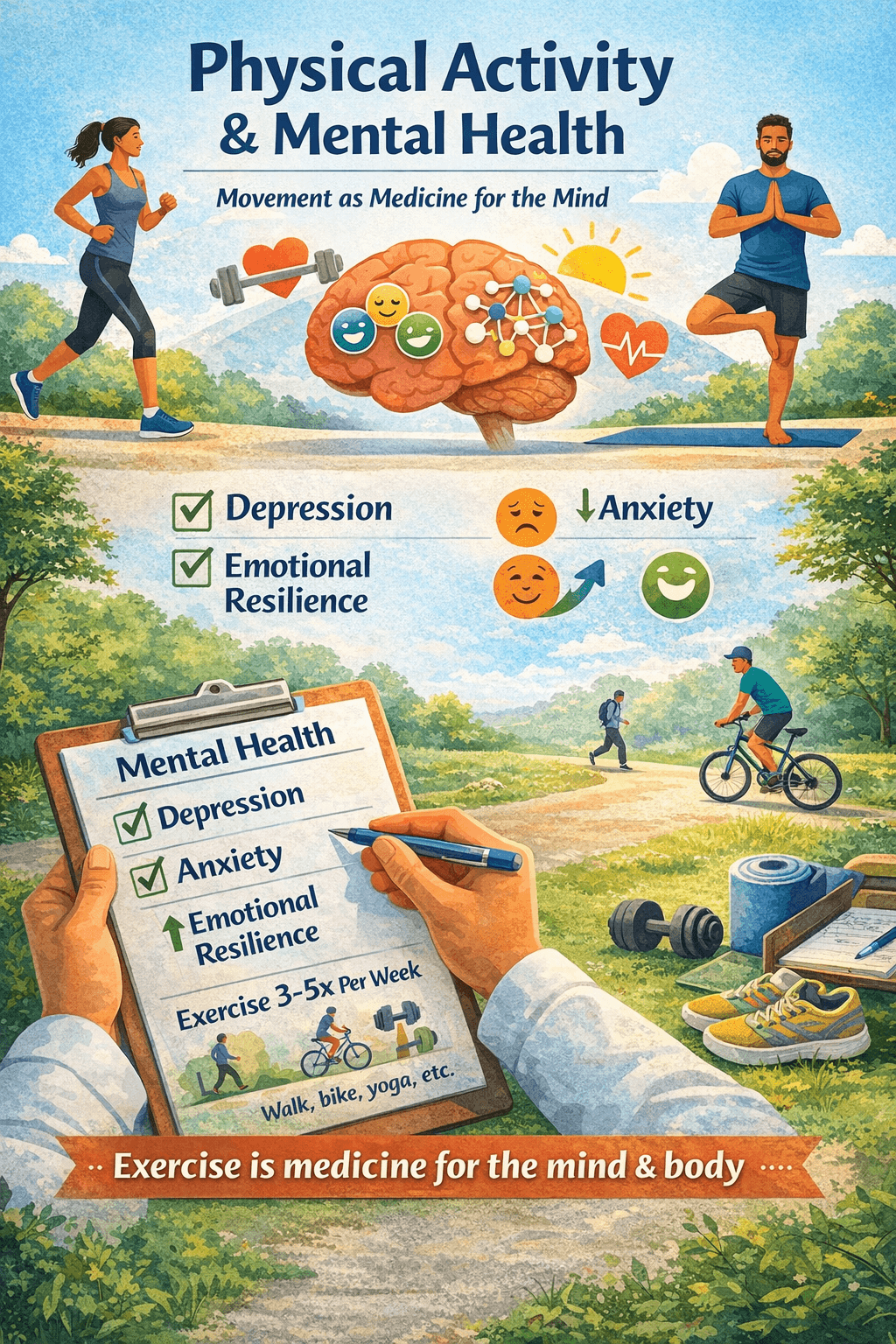
Physical Activity and Mental Health: More Than Just “Feel-Good” Advice
As a psychiatrist, I often hear patients say, “I know I should exercise, but I just don’t feel motivated.” When someone is struggling with depression, anxiety, burnout, or trauma, physical activity can feel like the last thing they want to do. And yet, movement is one of the most powerful, evidence-based tools we have to support mental health. This isn’t about achieving a perfect body or training for a marathon. It’s about using movement as medicine.
As a psychiatrist, I often hear patients say, “I know I should exercise, but I just don’t feel motivated.” When someone is struggling with depression, anxiety, burnout, or trauma, physical activity can feel like the last thing they want to do.
And yet, movement is one of the most powerful, evidence-based tools we have to support mental health.
This isn’t about achieving a perfect body or training for a marathon. It’s about using movement as medicine.
The Science Behind Movement and the Mind
Physical activity affects the brain in measurable, clinically meaningful ways:
1. Neurotransmitter Regulation
Exercise increases levels of:
Serotonin (mood regulation)
Dopamine (motivation and reward)
Norepinephrine (focus and alertness)
Endorphins (natural pain relief and mood elevation)
These are the same systems targeted by many antidepressants.
2. Neuroplasticity and Brain Growth
Regular physical activity promotes the release of BDNF (Brain-Derived Neurotrophic Factor), which supports:
Neuron growth
Synaptic plasticity
Cognitive resilience
In depression, BDNF levels are often reduced. Exercise helps reverse this trend.
3. Stress Regulation
Movement lowers baseline cortisol levels and improves the body’s ability to regulate stress. Over time, this improves emotional resilience and reduces anxiety sensitivity.
Exercise and Depression
Research consistently shows that moderate physical activity can:
Reduce depressive symptoms
Improve sleep
Enhance energy
Increase self-efficacy
In mild to moderate depression, exercise can be as effective as antidepressant medication for some individuals. In moderate to severe cases, it works best as an adjunct to therapy and/or medication.
One key message I emphasize to patients: motivation often follows action—not the other way around.
Exercise and Anxiety
For anxiety disorders, physical activity helps by:
Reducing muscle tension
Regulating breathing
Lowering physiological hyperarousal
Improving tolerance of physical anxiety sensations
Aerobic exercise, yoga, and strength training all show benefits. For patients with panic disorder, gradual exposure to increased heart rate through exercise can reduce fear of bodily sensations.
Physical Activity and Trauma
Trauma is not just stored in memory—it is experienced in the body.
Body-based movement practices (walking, yoga, martial arts, dance, somatic exercises) can:
Restore a sense of control
Improve interoceptive awareness
Reduce dissociation
Reconnect patients with their bodies in a safe way
For trauma survivors, the goal is not intensity—it is safety and regulation.
Barriers: Why It’s So Hard When You’re Struggling
When someone is depressed or anxious, common barriers include:
Fatigue
Anhedonia
Low motivation
Negative self-talk
Fear of failure
That’s why prescribing “Go to the gym 5 days a week” often backfires.
Instead, I recommend:
Starting with 5–10 minutes
Attaching movement to an existing habit
Choosing enjoyable activities (not punishing ones)
Focusing on consistency over intensity
Practical Prescription: What I Tell My Patients
If I were to write an exercise prescription for mental health, it would look like this:
Frequency: 3–5 days per week
Duration: 20–30 minutes (can be broken into smaller blocks)
Type: Brisk walking, cycling, swimming, strength training, yoga, dancing
Intensity: Moderate (you can talk but not sing)
But the most important rule?
Any movement is better than none.
Even standing up and stretching between tasks is a mental health intervention.
When Exercise Is Not Enough
While physical activity is powerful, it is not a cure-all.
If someone is experiencing:
Persistent low mood
Suicidal thoughts
Severe anxiety or panic
Functional impairment
They need a comprehensive mental health evaluation and appropriate treatment. Exercise supports recovery—but it does not replace therapy or medication when those are indicated.
Reframing Exercise as Self-Respect
I often encourage patients to stop thinking of exercise as a weight-loss tool and instead see it as:
Brain care
Stress regulation
Emotional processing
Energy management
Long-term cognitive protection
Movement is not punishment. It is nourishment for the nervous system.
Conclusion
Physical activity is one of the most accessible, affordable, and evidence-based interventions we have for mental health. As psychiatrists and mental health professionals, integrating movement into treatment plans—realistically and compassionately—can significantly improve outcomes.
The goal is not perfection.
The goal is progress.
And sometimes, progress begins with a 10-minute walk.